Yesterday we commemorated the 150th anniversary of the first ever @Cymru game.
Today we write the next chapter in Welsh football history!
 Wrexham Heritage
Yesterday we commemorated the 150th anniversary of the first ever @Cymru game.
Today we write the next chapter in Welsh football history!
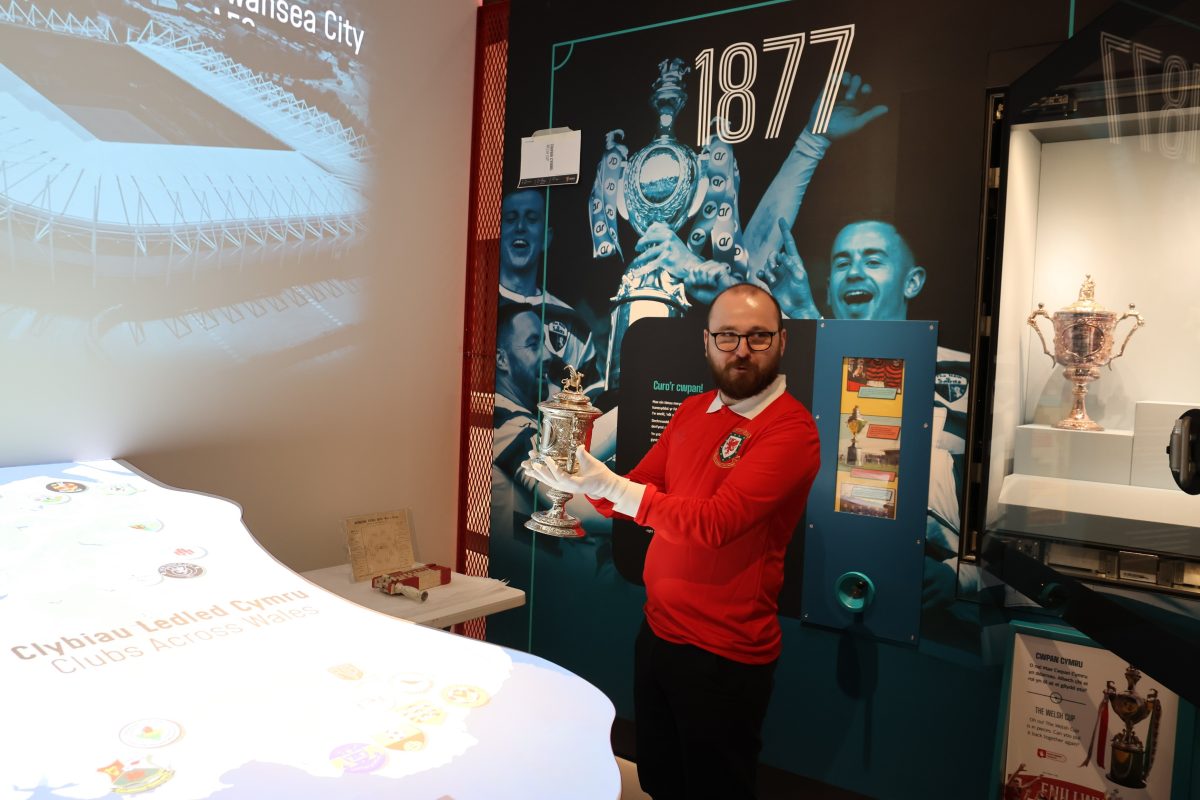
Wrexham’s ‘Museum of Two Halves Project’ Unveils New Name and Logo at Official Brand Reveal Event
Minister for Culture, Skills and Social Partnership – Jack Sargeant
Wrexham unveiled a defining moment in its cultural journey today, with the official brand reveal of the museum’s new name and logo, a fresh identity deeply-rooted in the region’s proud footballing heritage celebrating community spirit within a county steeped in rich cultural and industrial history.
The preview event, held at the newly named ‘Football Museum of Wales and Wrexham Museum’, brought together Welsh Government with Wrexham County Borough Council and the museum.
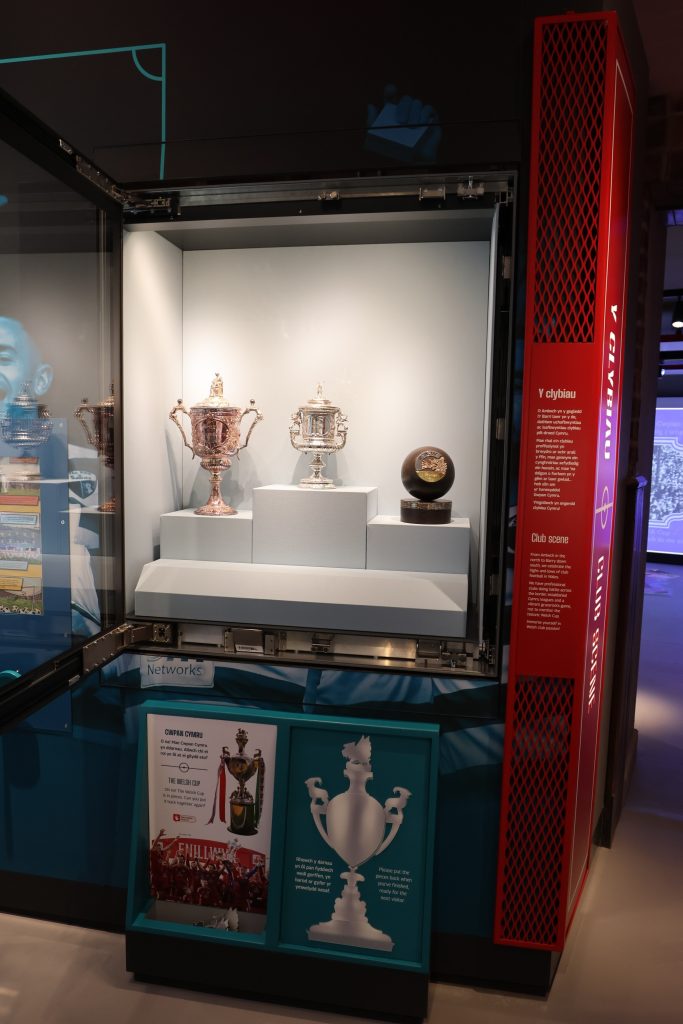
Reflecting the significance of football in life across Wales, the event featured a ceremonial placement of cherished football memorabilia into the first of the bespoke display cases; unveiled specially for the event.
This formal nod to the sport’s deep cultural contribution within a space dedicated to linking past heroes with future generations, signals an important step forward for the long-awaited museum, the transition from construction to curation and storytelling as it moves closer to opening.
“Today’s visit represents a defining moment for Wales’ newest museum. It brings together our mission for a Football Museum of Wales, a fitting home for our National football collection and ambition to deliver a destination that will inspire visitors for generations to come.” Jack Sargeant – Minister for Culture, Skills and Social Partnership commented. “This new identity captures the pride we all feel for our football heritage and the role this museum will play in celebrating the game that unites our communities.”
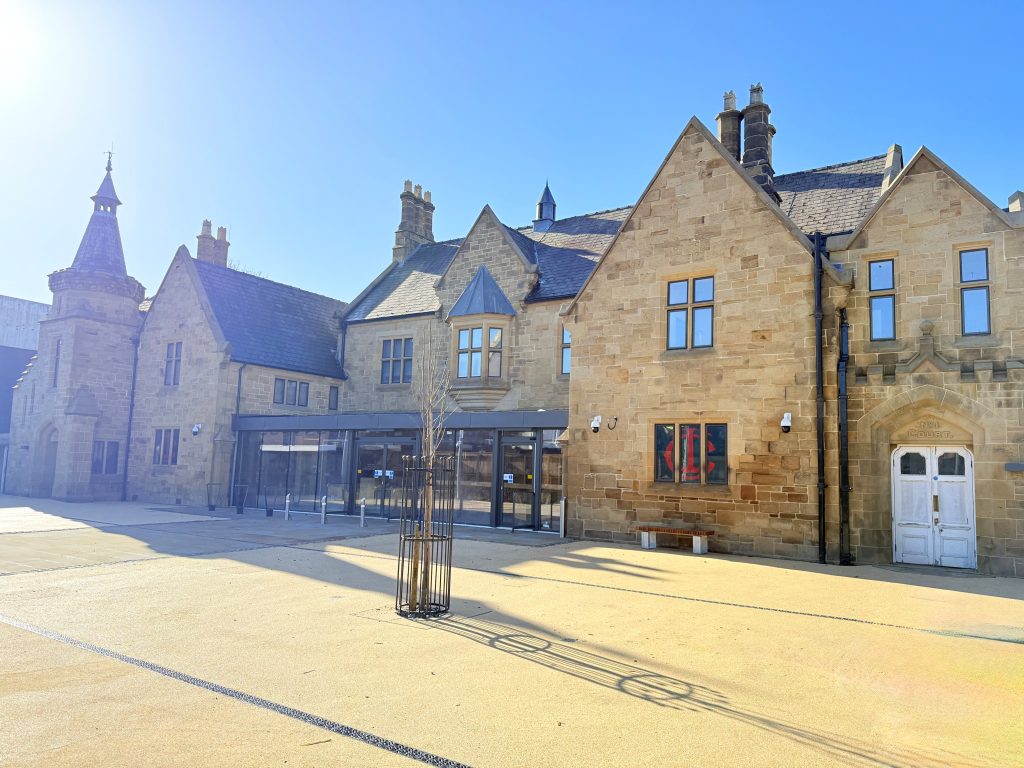
This re-brand is not just an aesthetic change, but a vision for how the museum will honour the stories, triumphs, and memories of football fans and players alike. Thanks to essential funding from Welsh Government alongside other funding partners, the museum project team have delivered an exceptional visitor attraction, celebrating football’s role in Welsh culture and community – demonstrating how sport heritage and local history continue to connect people across generations.

Paul Roberts, Lead Member for Partnerships and Community Safety WCBC said: “Sport inspires generations – and this brand reveal marks a massive step toward honouring that legacy in a way that everyone can be proud of. We are all looking forward to the opening of this museum with great anticipation and pride.”
This new brand forms part of an extensive creative project which will be rolled out across the Museum’s digital platforms in the coming weeks.

“Seeing the brand come to life and these first objects placed into the museum is a significant milestone. Our interactive exhibitions and public programming will offer a unique opportunity for those interested in both Wrexham’s and Welsh Football’s cultural tapestry, to explore and celebrate our fascinating history.”
Added Alwyn Jones, Chief Executive WCBC. “Today’s event is an exciting reminder that this building will soon be alive with visitors, stories and shared experiences.”
Work continues behind the scenes, with interior fitting and gallery preparation well underway. Project teams are currently focused on installing state-of-the-art displays, interactive elements and visitor amenities, as the galleries takes shape.

Opening date announcements and details of upcoming exhibitions will be shared as soon as they are confirmed.

150 years ago today saw the search for players for the first ever Cymru team come to an end as they prepared to face Scotland NT in Glasgow on 25/03/1876.
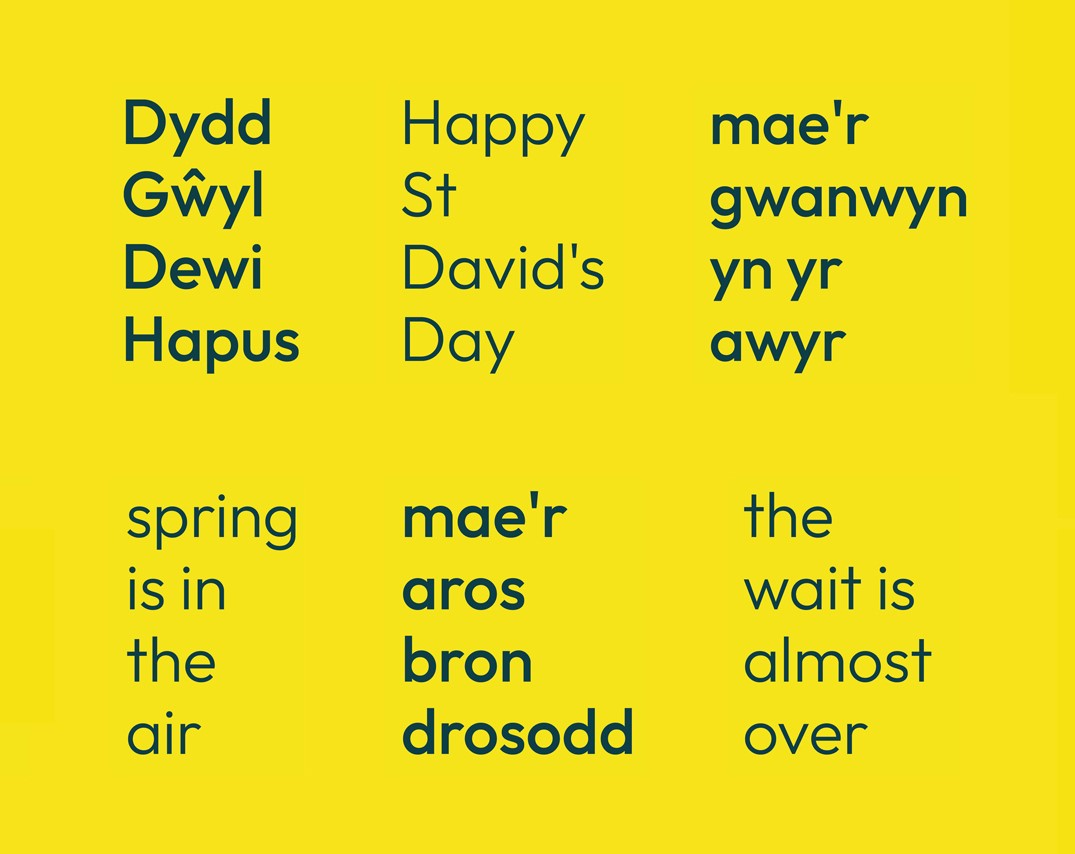
Dydd Gŵyl Dewi Hapus! Happy St David’s Day!
Mae’r aros bron drosodd… The wait is almost over…
Mae’r gwanwyn yn yr awyr! Spring is in the air!
#WrexhamMuseum #StDavidsDayWrexham #FootballMuseumWales #AmgueddfaBelDroedCymru #AmgueddfeyddWrecsam
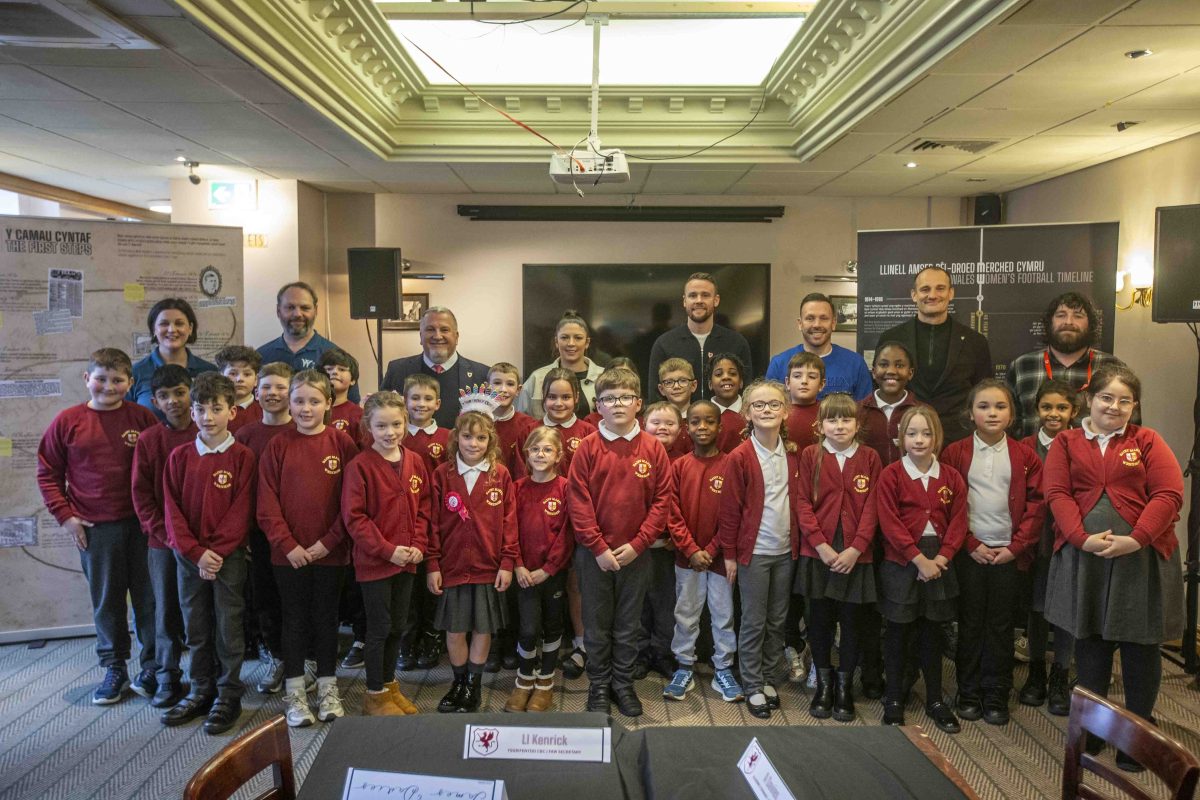
The team from the highly anticipated, football museum for Wales, held special workshops today at the Wynnstay Arms in Wrexham, to mark the occasion of the 150th anniversary of the FAW’s formation.
“Pupils from Wrexham primary schools were invited to the Wynnstay Arms to discover the origins of Welsh football on its 150th anniversary. This event is helping to inform the learning programme for the museum as we prepare for reopening.”
Eleri Farley – Learning Officer, Wrexham Museum of Two Halves
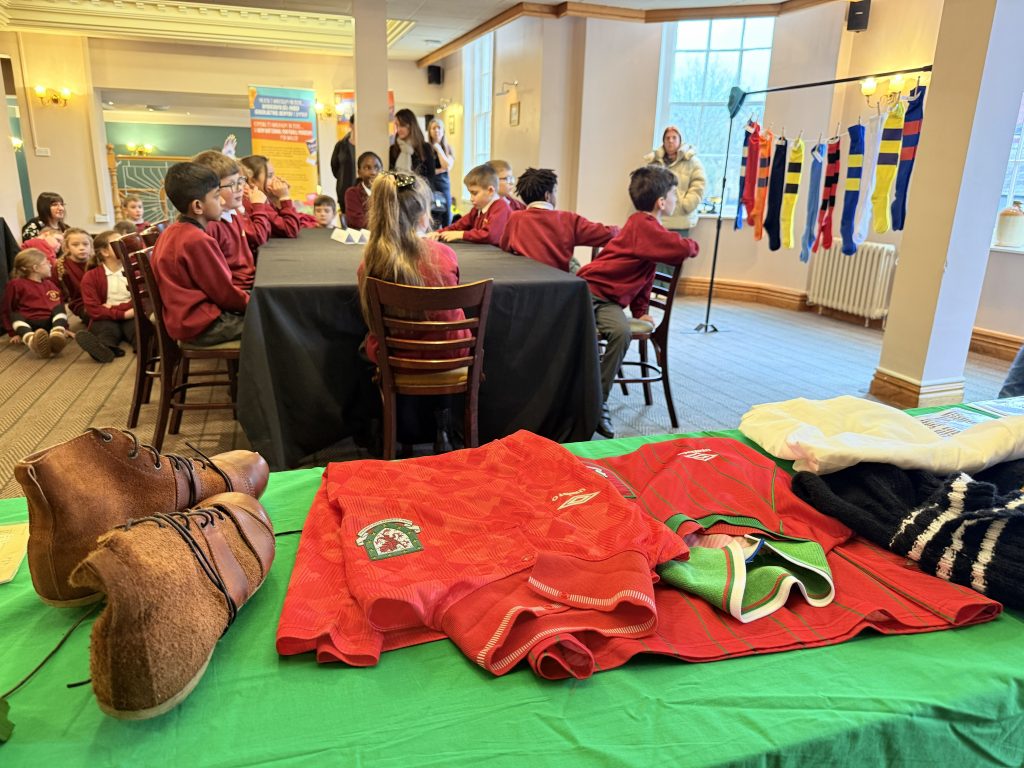
Each school session focussed on how and why the FAW was formed and was set within the room used for that first meeting, 150 years ago.
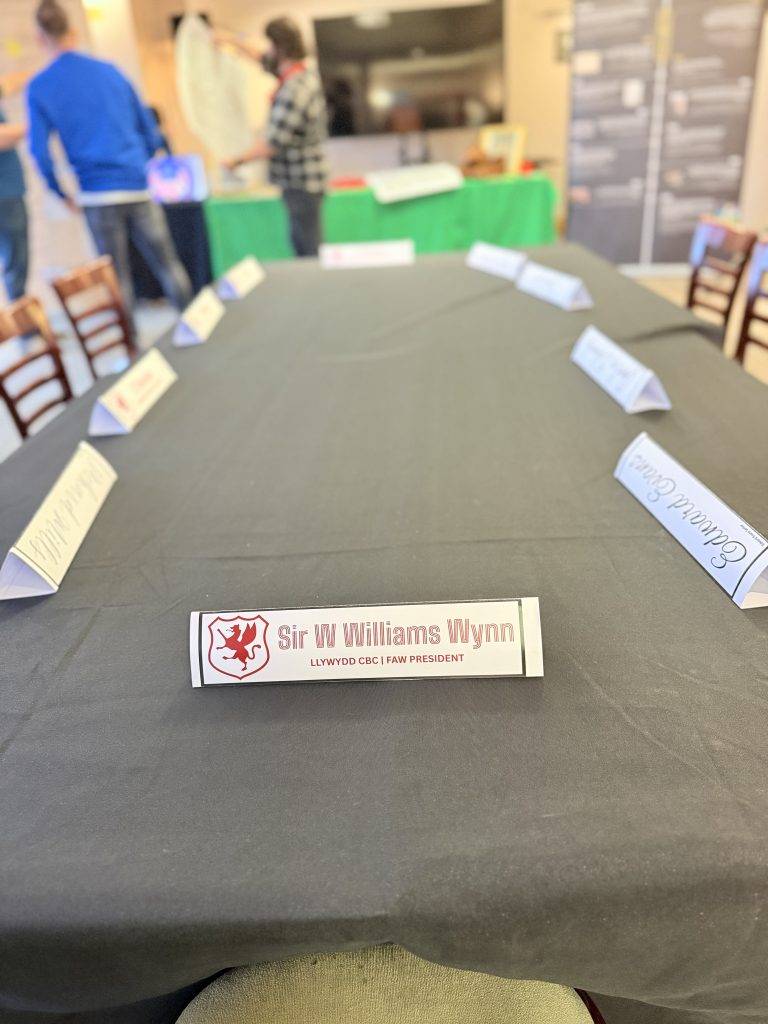
Tables were arranged in a boardroom style with name holders of the attendees placed at each setting.
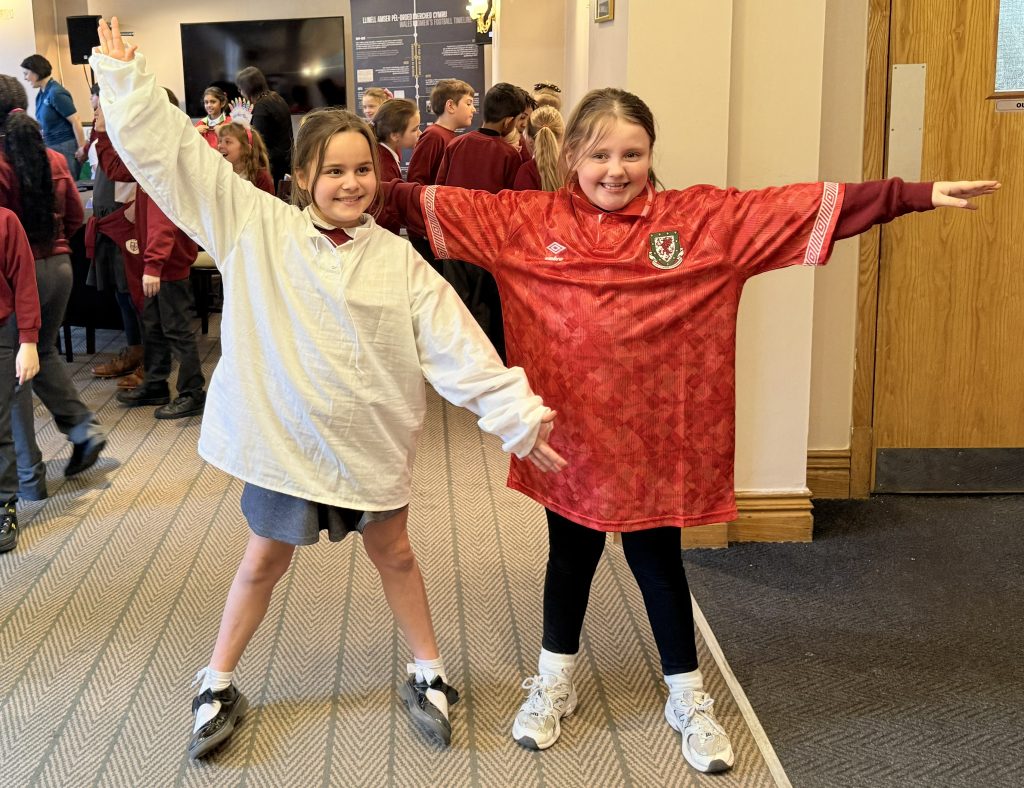
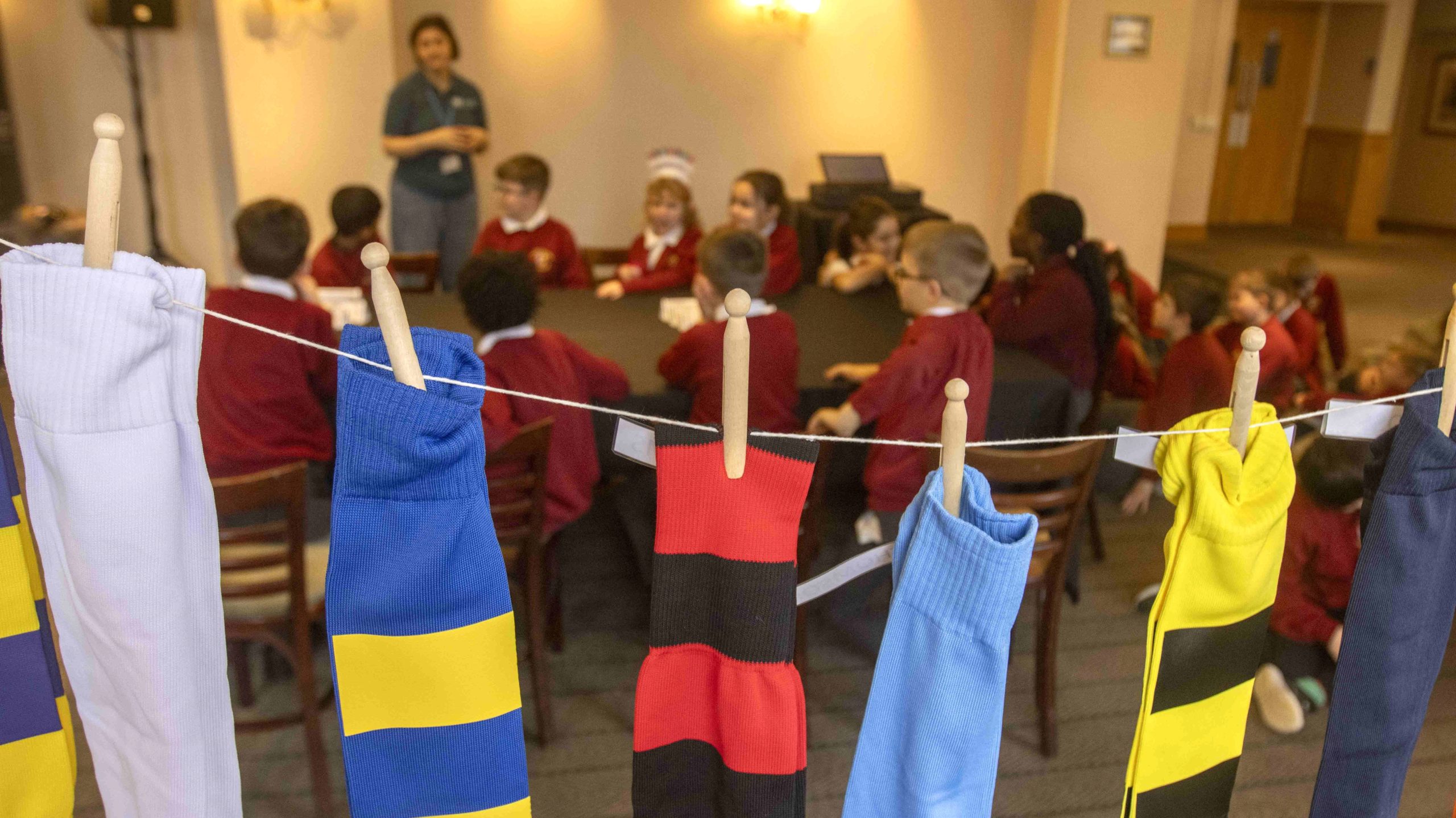
Pupils took part in an engaging workshop where they handled real objects, tried on replica costumes, and used football socks to explore how players used to be identified on the field.
They also learned who attended the first FAW meeting and were encouraged to explore who was missing and why, which lead to discussions around the women’s game and global majority histories.
The sessions followed a similar style to a successful pilot project undertaken with Carmarthenshire Libraries at the end of 2025, where pupils explored various stories around Welsh football including the women’s game.
Today’s event commemorated an important, anniversary in Welsh football’s story, engaging schools with local and national history supporting the curriculum for Wales.
Paul Roberts, Wrexham County Borough Council’s lead member for partnerships and community safety, said: “The school groups at The Wynnstay have enjoyed a taste of the engaging, innovative new ways they will explore and learn about our diverse local and football history. This experience offers an exciting glimpse into how future visits will bring the past to life through interactive storytelling and hands-on discovery, at Wrexham’s new museum.”
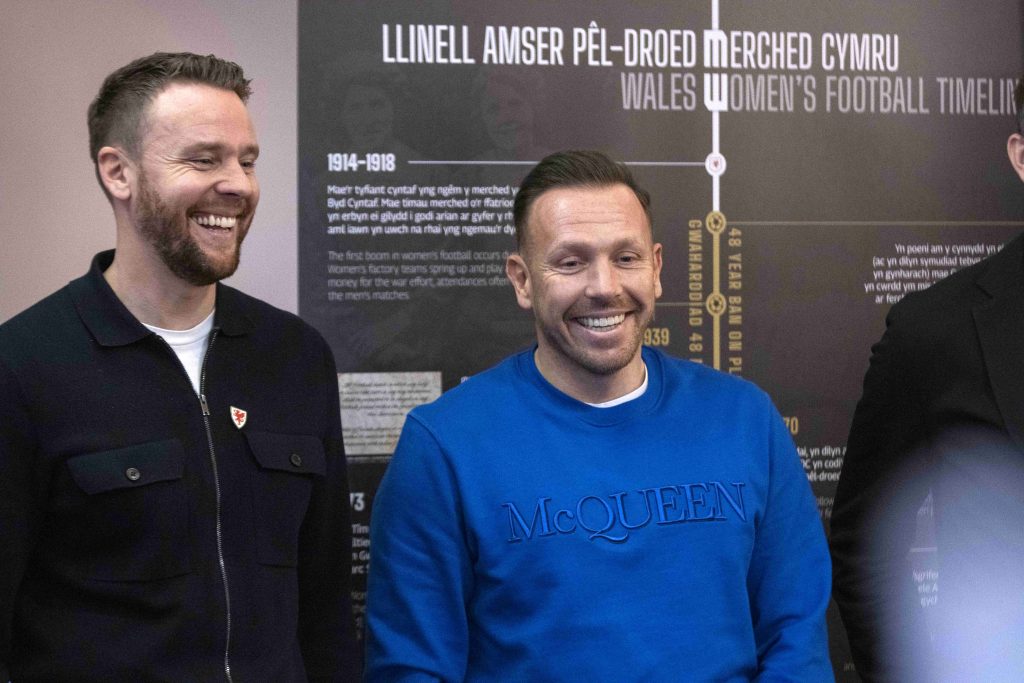
The pupils were excited to meet Craig Bellamy and Chris Gunter at the end of their session, as members of the FAW, arrived for their commemorative Council meeting at the Wynnstay.
“What a fantastic photo opportunity and a special chance for children to meet their football heroes on such a momentous day in Wales’ football history. We’ve enjoyed a full and inspiring schedule in Wrexham, beginning with the museum team, who showcased remarkable objects from the collection to our council members at this historic venue—an integral part of the Welsh football story.”
Ian Gwyn Hughes, Head of Public Relations & Culture, Football Association of Wales
Redevelopment works at Wrexham’s ‘Museum of Two Halves’ are progressing at pace, with galleries taking shape revealing the extensive new layout. The historic building is emerging from refurbishment and the brand new, world-class, national attraction is set to open later this year.
Main Photo:
St Marys RC School – Wrexham
Wrexham Museum: Eleri Farley – Learning Officer; Shon Lewis – Football Engagement Officer
FAW: Mike Jones – FAW President; Nia Davies – Head Coach Wales Women’s U-19; Chris Gunter- Cymry U-19 Head Coach; Craig Bellamy – Head Coach Wales Men’s Team; Dave Adams – FAW Technical Director, Delwyn Derrick – Football Engagement Officer, Wrexham Museum.
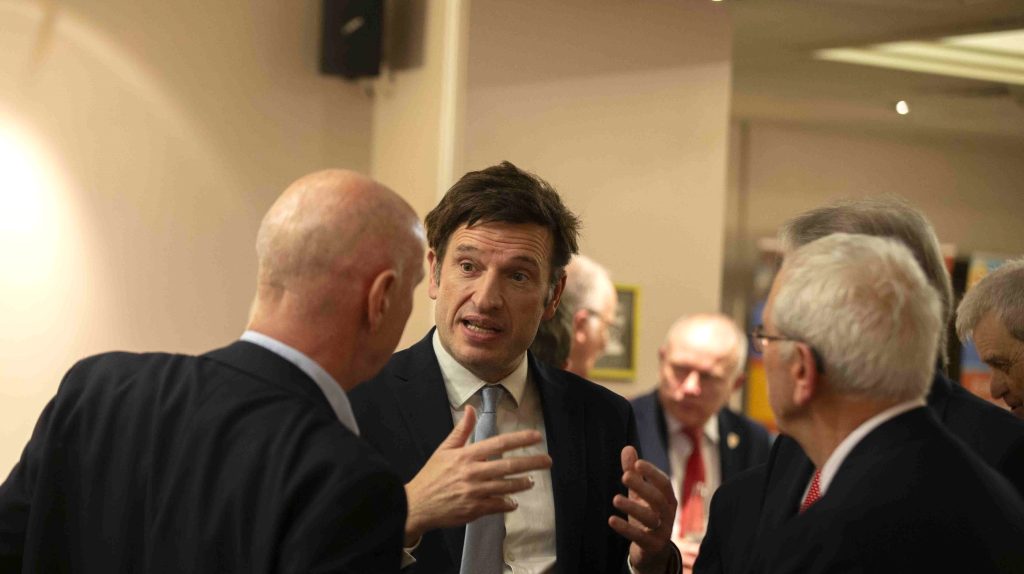
Noel Mooney – FAW CEO talking to Ian Gwyn Hughes
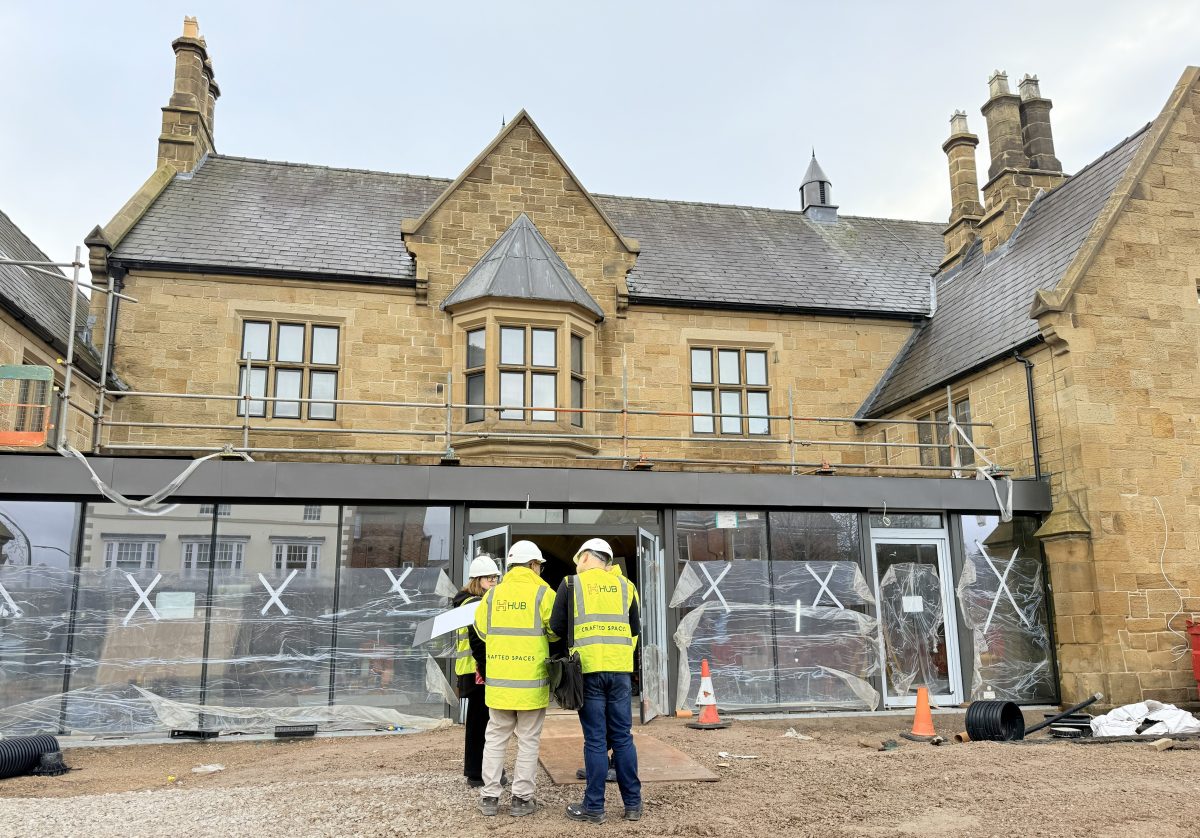


Redevelopment works at the Museum of Two Halves are progressing at pace, with galleries really taking shape now. The historic building is emerging from its refurbishment chrysalis and Wrexham’s new, world-class national attraction is on-track for opening later this year.
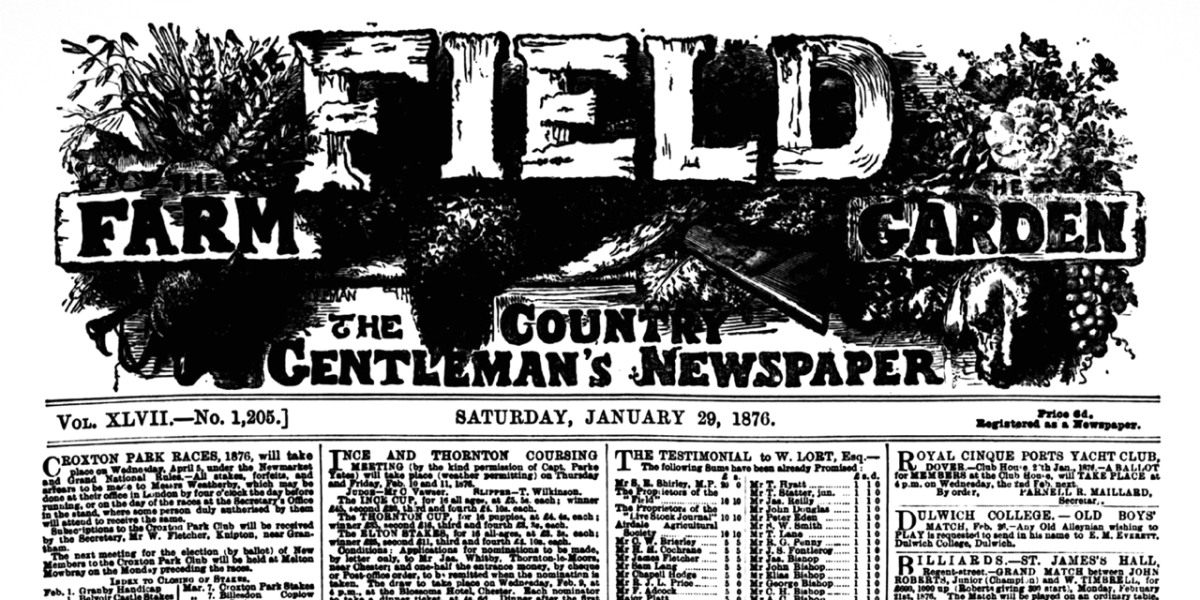
On the 29th January 1876, once again in the pages of the Field, and following the deluge of supportive letters the publication had received over the past three weeks in response to his suggestion about creating a Welsh national football team, George Clay-Thomas writes once more…and he’s not happy!
George had stated quite clearly in his original letter on the 8th January that he was merely suggesting the creation of a Wales team. However, he seemed to be quite upset that the numerous respondents had gotten the wrong end of the stick and were seemingly expecting him to be arranging this London-based match.
He was particularly unhappy with ‘A Highlander’, from a fortnight earlier, who had suggested that this shouldn’t be considered a true Wales side as the players would be Anglo Welsh, but was nonetheless supportive of a match taking place. George seemed particularly aggrieved with Highlander’s suggestions on how he felt George should be proceeding to arrange this match.
With time quickly running out however, George seemed to realize that the only way this match would ever become a reality was if he accepted his fate and, as suggested, stepped in to arrange things. Finishing his letter with a swipe at Highlander he basically said:
“Fine, I’ll make the arrangements for a London-based Welsh team, but you step up and either arrange the Scottish side yourself or find someone else to do it!”
By now, it is evidently clear from his correspondence that Clay-Thomas only had eyes for a match played under rugby rules, despite mentioning Association matches (albeit fleetingly) in his original letter. It’s at this point where the story of Welsh football’s early days veers away from George Clay-Thomas.
Back in Wrexham, even prior to his letter in the Field, Llewelyn Kenrick had been busily engaged in corresponding with players in various parts of Wales, assisted by George and David Thompson, urging them to form football clubs. He was also the main inspiration behind the movement to create the famous Black Park club in Chirk, for whom one of Wales’s most famous sons would decades later begin his career, one Mr. William Henry Meredith!
On the Wednesday following the publication of Llewelyn’s letter, Kenrick chaired a meeting at the Wynnstay Arms Hotel, its sole purpose…to appoint a committee that would arrange a game. As the Field would report later that week on the 29th January:
“A meeting to discuss the project of playing an International football match with Wales according to Association rules was held at the Wynnstay Arms Hotel, Wrexham, North Wales, on Wednesday last, when a committee was appointed to make preliminary arrangements. As soon as the match is definitely fixed, trial matches will take place on the ground of the Denbighshire County Cricket Club at Wrexham, for the purpose of choosing the Cambrian eleven. Gentlemen desirous of playing in these matches are requested to send in their names and addresses to the Chairman of the Cambrian Football Association, Ruabon, as early as possible.”
We didn’t know who the opposition would be, or where we’d play, but we had a plan on how to create a squad. Trials would be held and the callout for potential players had been made…we were up and running.
But the Cambrian Football Association? Really?
Surely there’s a better name than that out there!
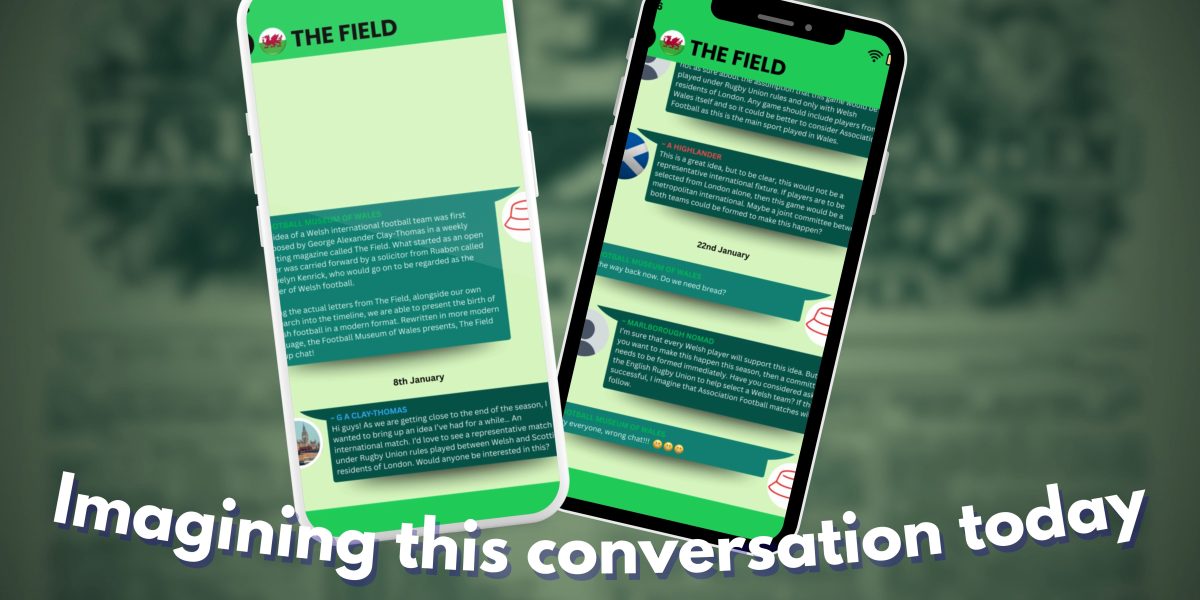
It is two weeks since Clay-Thomas’ initial suggestion in the Field to create a Welsh national football team, and the replies keep rolling in. In this Saturday’s edition there are a further two responses, regrettably, again using pseudonyms.
The first came from a gentleman who called himself ‘A Marlborough Nomad’. Incidentally, the Marlborough Nomads were a football club founded in 1868 in the Surbiton area of London. They played under rugby rules and in fact were founding members of the Rugby Football Union in 1871, the club was eventually disbanded in 1911.
At this time in 1876 however, the side was still going strong, and we can only surmise that our ‘Mr. Nomad’ held connections with the club, although in which capacity has unfortunately been lost to time. He also was very enthused about Clay-Thomas’ idea but felt time was of the essence if the idea of a match was to be realised that same season. He reiterated the original suggestion of enlisting the newly formed RFU’s help in sourcing a Welsh side and admitted that (perhaps in a nod to ‘Half Back’ from the previous week) Association football matches would probably follow, but that he was only concerned with the rugby side of things.
The other letter, however, was of an entirely different nature…
Sir, – The idea of an international match, under Association rules, between Wales and one of the sister countries, is being very popularly received in North Wales, and a meeting is to be held in Wrexham at an early date next week to discuss the matter, and to form a committee which shall have power to make preliminary arrangements. Any communications that I may receive shall be laid before the meeting to be held at Wrexham.
It was signed with a single word pseudonym:
‘Cymry’
The Welsh language name for the Welsh people, meaning “fellow-countrymen” or “compatriots”. A truly powerful response to a letter suggesting a London-based team selected from a pool of London-based players. This individual’s team would instead be of the people and for the people of Wales.
History would eventually reveal to us the true name behind ‘Cymry’. He was of course Samuel Llewelyn Kenrick, today celebrated as the father of Welsh football. Kenrick, a 28-year-old solicitor from Ruabon, a keen footballer and founding member of Ruabon Rovers FC, had evidently been busy behind the scenes since Clay-Thomas’ initial letter a fortnight earlier. Whilst George’s rugby match idea still had no clear plan or leader, Samuel had already arranged a committee meeting to flesh out the Association football match and bring it to fruition. Not only had he picked up George’s metaphorical gauntlet…he was running with it!
Thanks to the driving-force of Kenrick, the creation of a national Welsh football team and association was becoming a reality, it had a time, and it had a place…but it needed a name.
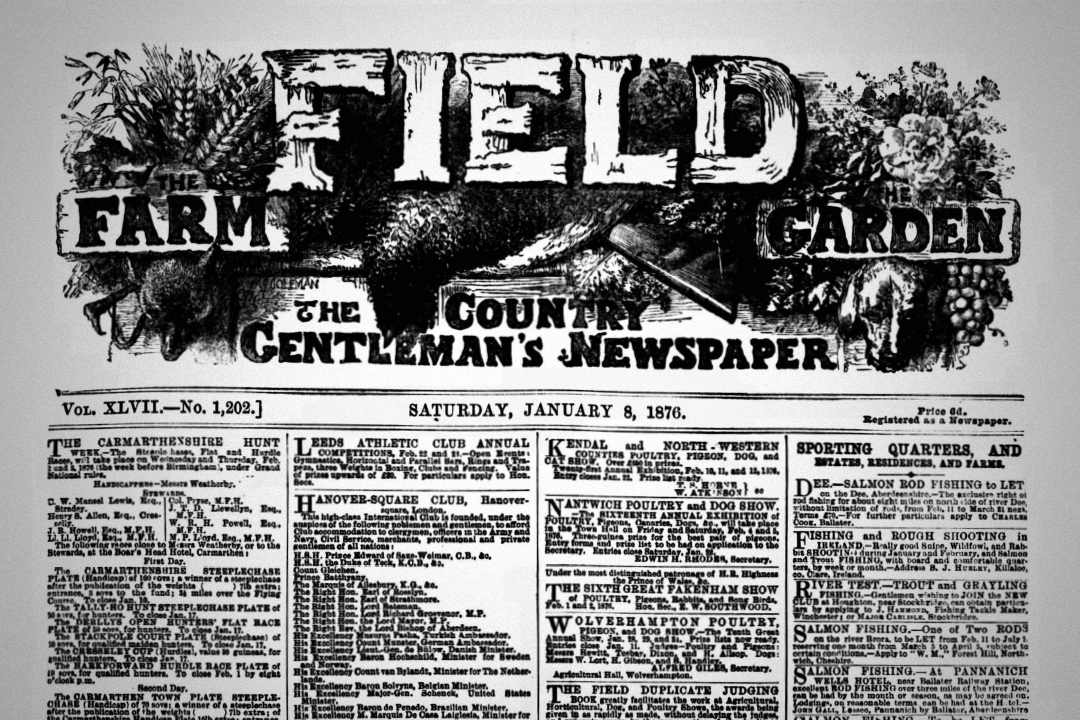
On the 8th January 1876, the spark that lit the blue touchpaper on the creation of the Welsh national football team was struck. It came in the form of an open letter within the pages of the Field newspaper, one of Britain’s foremost sporting publications of the time.
Written by 24 year old George Alexander Clay-Thomas, a London-based coal merchant originally from Carmarthenshire, he’d noticed the increasing popularity of the game and proposed the creation of a Welsh side to challenge one of the already established Scotland or Ireland teams in a match. George however wanted the team to be made up exclusively of fellow London based Welshmen and any eventual match also to take place in the capital.
Both football and rugby were regarded as different codes of the same game back in 1876, both effectively coming under the overarching banner of ‘Football’. George wanted the game to be played under Rugby rules rather than the Association rules of ‘soccer’ and what we today know as football. He even suggested asking for the Rugby Union’s help in spreading the word amongst London’s clubs.
George seemingly felt that ‘football’ was not as popular in Wales as the rest of Britain, and he suggested that the creation of this team would only help to increase its popularity here. We can only surmise however that he probably meant ‘rugby football’ such was his wish to create a side playing ‘rugby rules’. He even mentions in his letter that an ’English twenty would be much too formidable a body’ for an untested Welsh team (teams playing rugby rules in the 1870’s usually had 20 players a side). Was George, now living and working in London, simply ‘out of the loop’ or was he correct in his assumption that rugby was not enormously popular at the time in Wales?
It was never George’s intention to make any further arrangements, however; he merely wanted to raise the suggestion so that others may take the idea forward.
George had thrown down the gauntlet…would anyone pick it up?
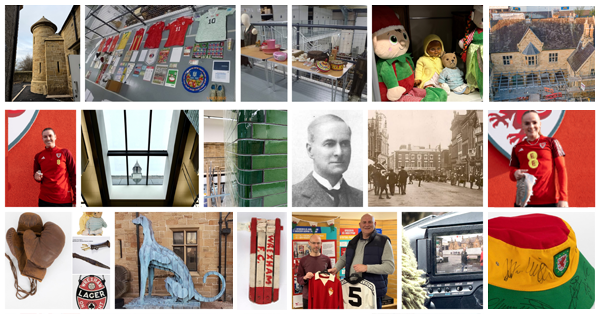
Another huge year for the Wrexham Museum project team, the galleries are changing rapidly with visible progress across the whole development.
We’re excited to start planning next year’s opening events, so please follow progress on our socials, drop us a like and share the news from your brand new Museum of Two Halves.
We’re reflecting on our progress throughout the past 12 months
and can’t wait to share more exciting news with you next year!