Yesterday we commemorated the 150th anniversary of the first ever @Cymru game.
Today we write the next chapter in Welsh football history!
 Wrexham Heritage
Yesterday we commemorated the 150th anniversary of the first ever @Cymru game.
Today we write the next chapter in Welsh football history!
The meeting on the 2nd of February at the Wynnstay Arms in Wrexham was a quick affair arranged at short notice with (according to FAW Council member George Lerry writing in 1924) only four of the newly founded Cambrian Football Association committee members in attendance: Llewelyn Kenrick, Edward Evans, Richard Mills and Arthur Davies.
The name Cambrian Football Association had also seemingly been dropped, mere days after its introduction, possibly in an attempt to better match the only other two footballing associations in existence at the time, the Football Association, and the Scottish Football Association. Atop the minutes of this meeting Kenrick had written a new name, the Football Association of Wales, a name that would stand for over 150 years.
The reason for needing another meeting only a week after their first was that a communication had been received by Kenrick, a challenge by the Scottish Football Association to play them in a game of football on the 25th of March 1876. The only issue…they wanted it played in Glasgow! Only one item was therefore on the agenda on the 2nd February:
“We propose that the challenge sent by Scotland to the Hon. Secretary to play a game under Association rules, at Glasgow on March 25, 1876 be accepted.”
All four attended agreed and the motion was passed. A letter was quickly drafted and sent to the editors of the Field and Bell’s Life to announce the match and details of the upcoming trial matches. It also called for “gentleman desirous of playing in this match to write to the Hon. Secretary of the FAW in Ruabon”, Llewelyn Kenrick basically!
They had seven weeks to create a team from scratch.

It is two weeks since Clay-Thomas’ initial suggestion in the Field to create a Welsh national football team, and the replies keep rolling in. In this Saturday’s edition there are a further two responses, regrettably, again using pseudonyms.
The first came from a gentleman who called himself ‘A Marlborough Nomad’. Incidentally, the Marlborough Nomads were a football club founded in 1868 in the Surbiton area of London. They played under rugby rules and in fact were founding members of the Rugby Football Union in 1871, the club was eventually disbanded in 1911.
At this time in 1876 however, the side was still going strong, and we can only surmise that our ‘Mr. Nomad’ held connections with the club, although in which capacity has unfortunately been lost to time. He also was very enthused about Clay-Thomas’ idea but felt time was of the essence if the idea of a match was to be realised that same season. He reiterated the original suggestion of enlisting the newly formed RFU’s help in sourcing a Welsh side and admitted that (perhaps in a nod to ‘Half Back’ from the previous week) Association football matches would probably follow, but that he was only concerned with the rugby side of things.
The other letter, however, was of an entirely different nature…
Sir, – The idea of an international match, under Association rules, between Wales and one of the sister countries, is being very popularly received in North Wales, and a meeting is to be held in Wrexham at an early date next week to discuss the matter, and to form a committee which shall have power to make preliminary arrangements. Any communications that I may receive shall be laid before the meeting to be held at Wrexham.
It was signed with a single word pseudonym:
‘Cymry’
The Welsh language name for the Welsh people, meaning “fellow-countrymen” or “compatriots”. A truly powerful response to a letter suggesting a London-based team selected from a pool of London-based players. This individual’s team would instead be of the people and for the people of Wales.
History would eventually reveal to us the true name behind ‘Cymry’. He was of course Samuel Llewelyn Kenrick, today celebrated as the father of Welsh football. Kenrick, a 28-year-old solicitor from Ruabon, a keen footballer and founding member of Ruabon Rovers FC, had evidently been busy behind the scenes since Clay-Thomas’ initial letter a fortnight earlier. Whilst George’s rugby match idea still had no clear plan or leader, Samuel had already arranged a committee meeting to flesh out the Association football match and bring it to fruition. Not only had he picked up George’s metaphorical gauntlet…he was running with it!
Thanks to the driving-force of Kenrick, the creation of a national Welsh football team and association was becoming a reality, it had a time, and it had a place…but it needed a name.
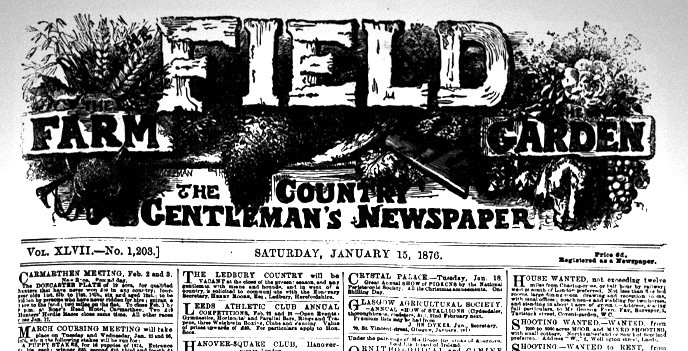
George Clay-Thomas’s initial letter to the Field on 8 January 1876, suggesting the creation of a Welsh national football team, would seem to have been well received. By the very next publication the following Saturday (15 January) two replies were awaiting him, both complimentary…in part!
Most (but not all) of the authors of the letters to the editor of the Field often liked to use pseudonyms. Lucky for us George Clay-Thomas decided to forgo this practice, but his respondents on this day unfortunately did not.
The first response was from a gentleman calling himself A. Highlander. Seemingly speaking from a Scottish perspective, he felt the idea was a good one but was concerned with the suggestion that the teams be selected from players who lived and worked in London. He felt that such teams could not “be representative of their respective countries”, however as long as that point was clarified and understood was fully supportive of the ‘London’ plan. He looked to Clay-Thomas for further guidance on the next steps and to either begin arranging things himself or to nominate someone else to take matters further, even suggesting London-based teams from which a Scottish side could be raised.
The second response came from a gentleman calling himself Half Back. He was also supportive, but equally cynical about only choosing from a pool of London-based Welshmen. He felt the match (from a Welsh perspective) could only go ahead and be considered a true international if the team consisted of players living in Wales. However, unlike Highlander, Half Back was not enamoured with the thought of a match played under Rugby Union rules and instead suggested the game be played according to Association (soccer) rules…indeed he seemed to echo Clay-Thomas’s suggestion from a week earlier that the game of rugby isn’t as popular in Wales when he elaborated that Association rules are “the rules chiefly adopted in the Principality”.
This by the way is the very first instance, anywhere, we’re aware of that the idea of a Welsh national football team playing under Association rules gets mentioned.
Would there be more responses the following week?
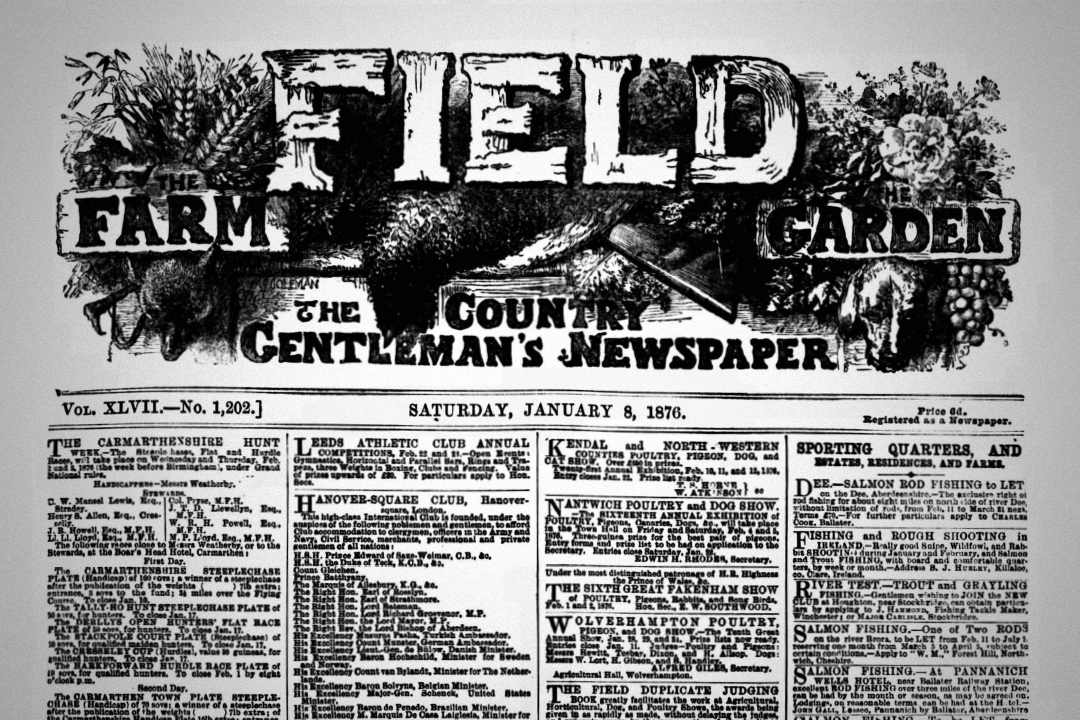
On the 8th January 1876, the spark that lit the blue touchpaper on the creation of the Welsh national football team was struck. It came in the form of an open letter within the pages of the Field newspaper, one of Britain’s foremost sporting publications of the time.
Written by 24 year old George Alexander Clay-Thomas, a London-based coal merchant originally from Carmarthenshire, he’d noticed the increasing popularity of the game and proposed the creation of a Welsh side to challenge one of the already established Scotland or Ireland teams in a match. George however wanted the team to be made up exclusively of fellow London based Welshmen and any eventual match also to take place in the capital.
Both football and rugby were regarded as different codes of the same game back in 1876, both effectively coming under the overarching banner of ‘Football’. George wanted the game to be played under Rugby rules rather than the Association rules of ‘soccer’ and what we today know as football. He even suggested asking for the Rugby Union’s help in spreading the word amongst London’s clubs.
George seemingly felt that ‘football’ was not as popular in Wales as the rest of Britain, and he suggested that the creation of this team would only help to increase its popularity here. We can only surmise however that he probably meant ‘rugby football’ such was his wish to create a side playing ‘rugby rules’. He even mentions in his letter that an ’English twenty would be much too formidable a body’ for an untested Welsh team (teams playing rugby rules in the 1870’s usually had 20 players a side). Was George, now living and working in London, simply ‘out of the loop’ or was he correct in his assumption that rugby was not enormously popular at the time in Wales?
It was never George’s intention to make any further arrangements, however; he merely wanted to raise the suggestion so that others may take the idea forward.
George had thrown down the gauntlet…would anyone pick it up?